
Overview

Monitoring Tigers in Ranthambore

Ranthambhore is recognised as one of the best-monitored tiger reserves in India. More individual tigers have been identified, tracked, and documented here than in almost any other tiger reserve in the country. The methods used to monitor tigers have evolved considerably over the decades, reflecting advances in wildlife science and technology.

The Era of Pugmark Monitoring

Like all other tiger reserves in India, Ranthambhore initially relied on the pugmark method to estimate tiger numbers. During the summer months, when the forest floor was dry and tracks were clearly visible, pugmark impression pads were prepared at important junctions, trails, and road crossings throughout the reserve. Loose, finely sieved soil was spread over these sites to create a uniform surface. As tigers walked across these prepared patches, clear pugmark impressions were left behind.

This exercise usually continued for five to fifteen days, depending on local conditions. The collected pugmarks were then compared in an attempt to identify individual tigers based on the size, shape, and dimensions of their footprints.

Although widely practiced for several decades, the pugmark method was later found to be unreliable. Studies showed that it was often impossible to distinguish one individual tiger from another based solely on footprints. In many cases, even differentiating between males and females proved difficult. As a result, the pugmark method was officially abandoned in 2006 as the principal population-estimation method.
Beginning of Scientific Monitoring

Scientific monitoring of tigers in Ranthambhore began well before it became a nationwide practice. In 1999, renowned wildlife biologist Dr. Ullas Karanth was invited to Ranthambhore to conduct one of India's early camera-trap-based studies of tiger populations. Using photographic capture-recapture techniques, he produced one of the first scientifically robust estimates of the reserve's tiger population.

Building on this work, Tiger Watch, under the guidance of Dr. Dharmendra Khandal, initiated an intensive tiger-monitoring programme during 2003–2004. In a report submitted in June 2004, Tiger Watch also began assigning individual identification codes to tigers, such as TW1, TW2, TW3 and TW4, creating a systematic record of individually known animals and their histories.

This approach was subsequently adopted by the Forest Department, under the guidance of G. S. Bhardwaj, then a DFO. The use of individual identification codes helped establish a consistent system for monitoring tigers and documenting their movements, territories, reproduction and changing social structure over time.

National Tiger Estimation

The National Tiger Estimation programme, based on a scientifically standardised protocol developed by the Wildlife Institute of India (WII) and implemented under the National Tiger Conservation Authority (NTCA), began in 2006. Since then, nationwide tiger estimation has been conducted every four years — in 2006, 2010, 2014, 2018, and 2022. The nationwide protocol combines camera-trapping, occupancy surveys, habitat assessment, and statistical modelling to estimate tiger populations across India.

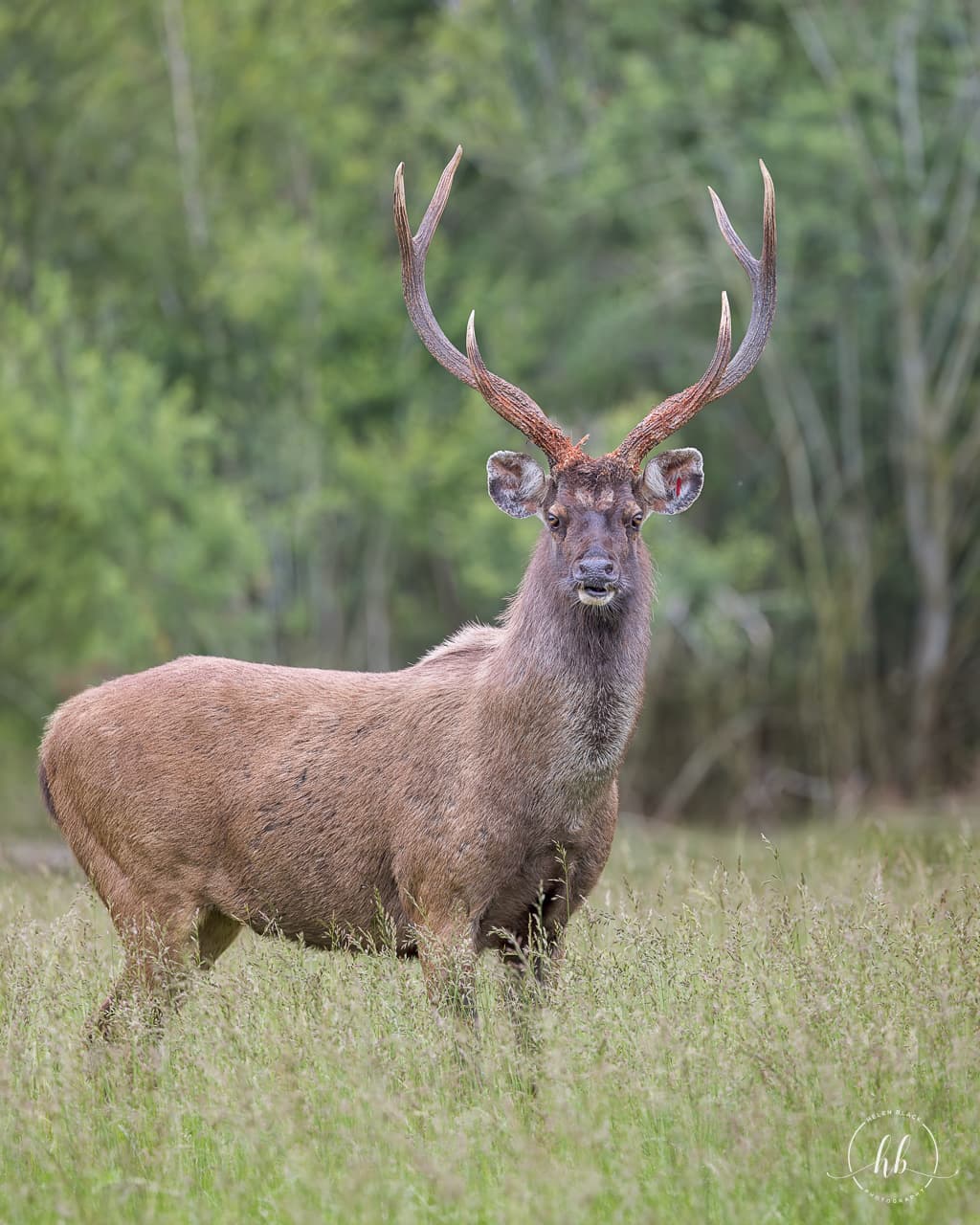
Sambar deer, an important tiger prey species in Ranthambhore

Monitoring Tiger Prey

Prior to 2006, populations of major prey species such as sambar, chital, nilgai, and wild pig were estimated using the waterhole census method. Observers counted animals visiting water sources during the dry season.

Following the introduction of the National Tiger Estimation protocol, prey estimation shifted to the line transect distance sampling method. While this method is scientifically more rigorous, it is also considerably more complex. Its accuracy depends heavily on proper field implementation, and variations in observer skills sometimes affect the precision of the estimates.

Individual Identification and Naming

While nationwide tiger surveys focused primarily on estimating tiger numbers, Ranthambhore pioneered the systematic monitoring of individual tigers, an approach established by Tiger Watch and subsequently adopted by the Forest Department.

In 2007, the Forest Department introduced the identification system that continues to be followed today, assigning every known tiger a unique identification number, such as T-1, T-2, T-3, and so on. This sequential numbering continued up to T-139.

In 2023, the numbering system was revised. Under the new system, a tiger is assigned an identification number only after it becomes independent of its mother, usually at around two years of age. The first two digits indicate the year in which the tiger was assigned its identification number, followed by a sequential number for that year. For example: T2301 — the first tiger assigned an identification number in 2023; T2401 — the first tiger assigned an identification number in 2024.

The year in the identification number therefore indicates the year of assignment, not the tiger's year of birth. This system immediately indicates when a tiger entered the monitoring database as an independent individual and has greatly improved long-term demographic monitoring and record-keeping.