
Overview

Tiger Behaviour in Ranthambore

Ranthambhore is one of the finest places in the world to observe the natural behaviour of wild tigers. Unlike many other tiger reserves, almost every resident tiger here is individually known and identified by a name, code number, and lineage. Decades of continuous monitoring by researchers and individuals have made it possible to follow the lives of individual tigers from birth to adulthood.

Solitary and Territorial

The tiger is both a solitary and territorial animal. Except during courtship or when a mother is raising her cubs, tigers usually live alone. Every adult maintains a territory that provides sufficient prey, water, and shelter. A male's territory generally overlaps with those of one or more females. Adult males usually occupy territories of about 30–45 km², while females generally maintain territories of around 15–25 km², although the size varies according to prey availability and habitat quality.
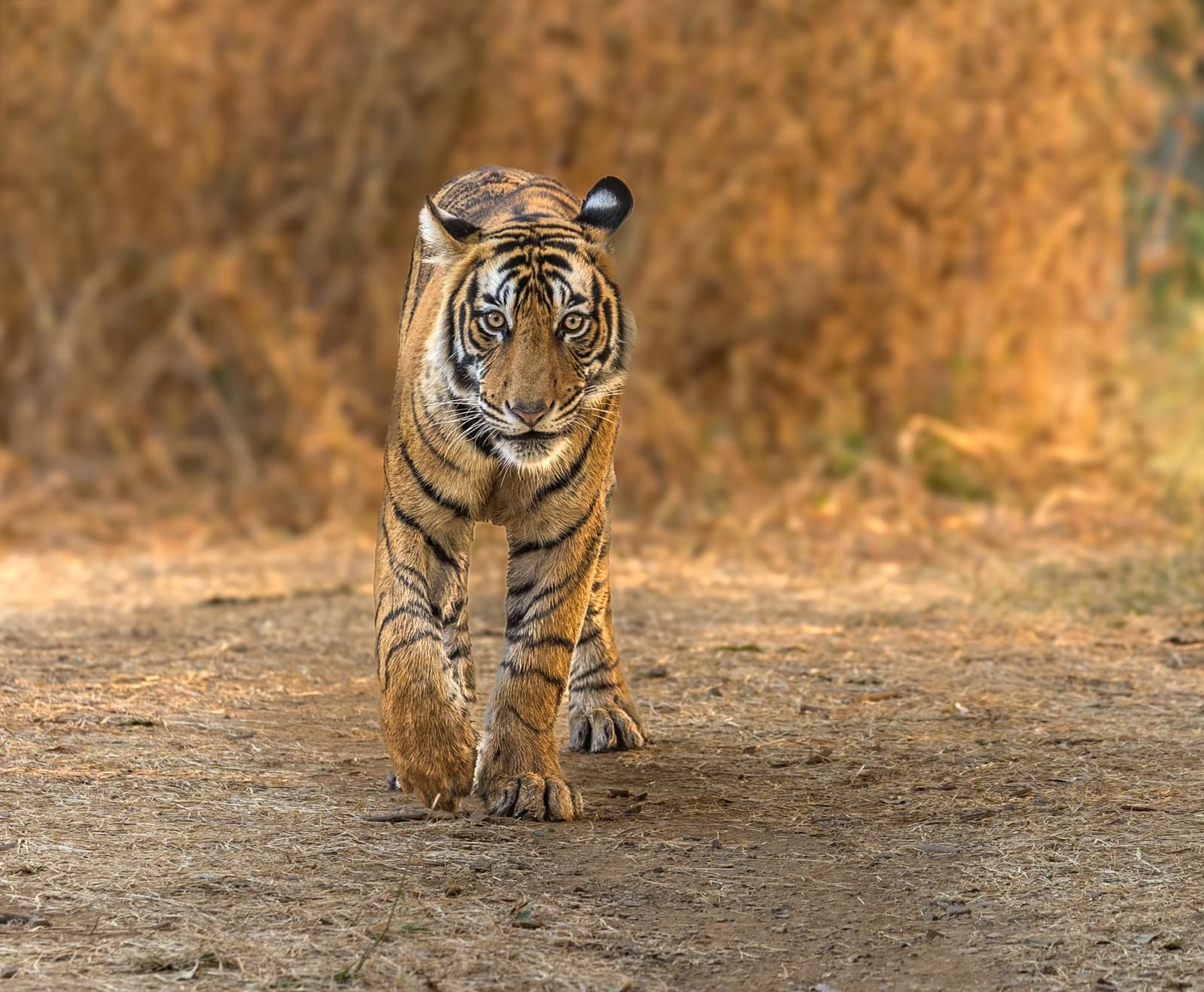
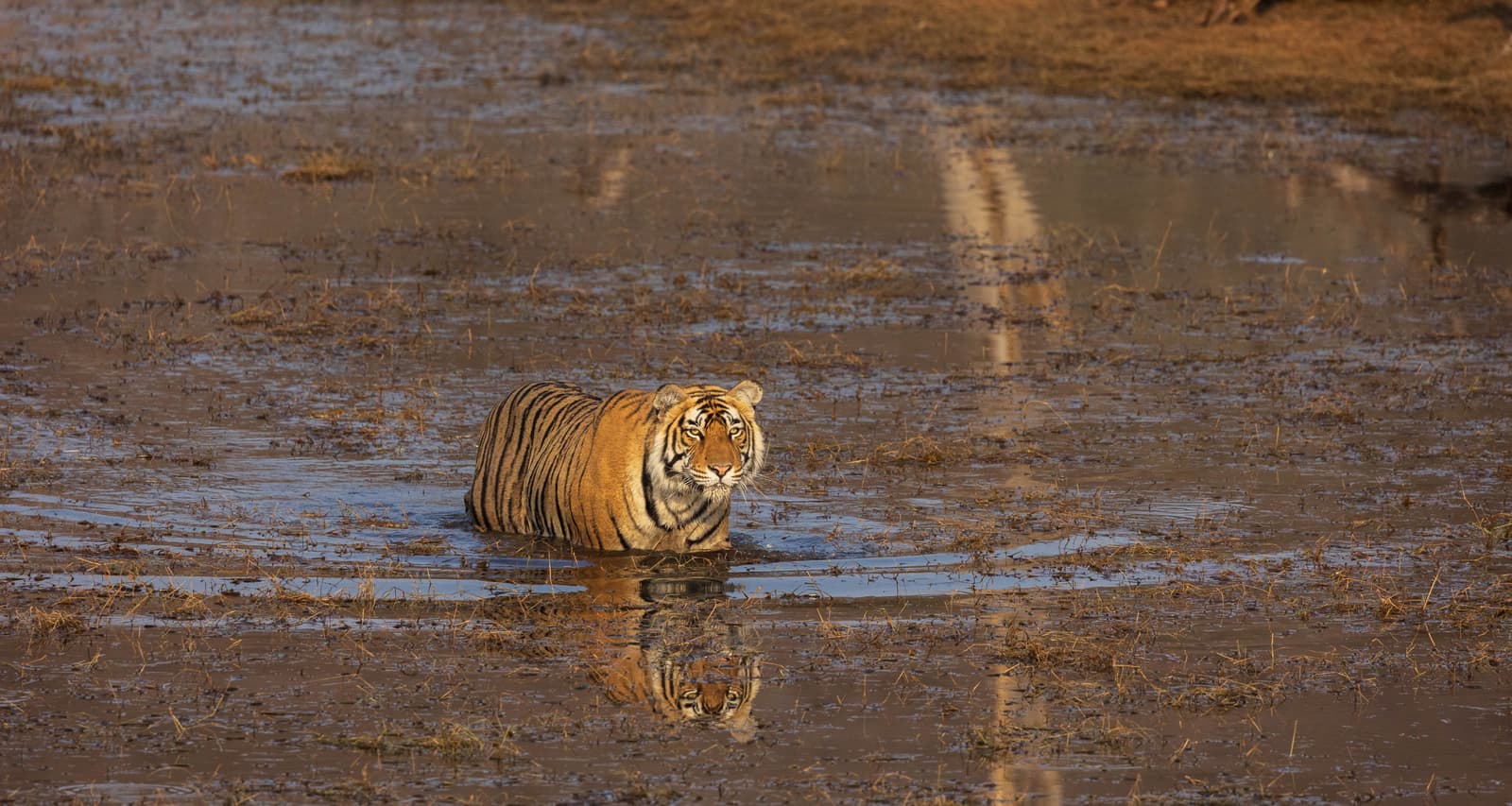
Royal Bengal Tiger in Ranthambhore forest

Scent Marking and Communication

Tigers regularly patrol and defend their territories by leaving scent marks. The most common method is spraying urine on prominent trees, especially along roads, trails, and junctions frequently used by other tigers. They also scratch the ground with their hind feet, creating distinctive scrapes that carry scent from glands located between their toes. Tree scratching with the claws is another form of communication. These scent marks act as messages that inform other tigers about the identity, sex, and reproductive status of the resident animal, helping to avoid unnecessary confrontations.

Tiger Vocalisations

Although often regarded as silent animals, tigers communicate using a variety of vocalisations. Roaring is relatively uncommon and is generally heard over long distances. More frequently, visitors may hear deep moans, chuffing sounds between familiar animals, growls, snarls, hisses, or short calls used during courtship or territorial encounters. Each vocalisation serves a different purpose.

Raising Cubs

The tigress plays the principal role in raising her cubs. After a gestation period of about 95–110 days, she usually gives birth to two to four cubs in a secluded den or sheltered location. At birth, each cub weighs approximately one kilogram and is completely helpless. Their eyes remain closed for about 7–10 days, after which they gradually begin to explore their surroundings. Cubs begin eating meat at around two to three months of age while continuing to nurse from their mother. By about six months, they increasingly depend on meat from kills made by their mother, and their growth thereafter is remarkably rapid.

Dispersal and Independence

The cubs remain with their mother for nearly two years, during which she teaches them the essential skills needed for survival, including stalking, hunting, recognising danger, and defending themselves. Young females may establish territories within or adjacent to portions of their mother's former range. Young males, however, usually disperse over much greater distances in search of vacant territories, often travelling through unfamiliar landscapes before establishing their own home range. While infanticide by unrelated males does occur in nature, male tigers do not invariably kill cubs.

Tiger moving through Ranthambhore woodland

Hunting Behaviour

Tigers are powerful ambush predators. They rely on stealth, cover, and patience rather than long-distance pursuit. Most hunts begin with a careful stalk, using vegetation, rocks, or undulating ground to approach prey unnoticed. Only when the tiger is close enough does it launch a short, explosive charge. An adult tiger requires roughly the equivalent of a chital-sized prey animal every five to seven days, and over the course of a year may kill around 40–50 large animals, depending on prey size and hunting success. Visitors commonly observe them walking, swimming, resting, hunting, or interacting with other tigers during the early morning and late afternoon when temperatures are cooler.